It bills your customers in stablecoins, collecting against an authorisation they sign in their own wallet. Settlement goes straight to an address you control, and Reclack never holds the money.
- Subscriptions
- One-off checkout
- Invoices
- Payment links
- Usage billing
- Customer portal
What it is
Billing infrastructure, not a wallet and not a bank
Reclack sits where any billing system sits: between what you sell and what you are paid for it. What changes is the instrument, because the thing being charged is a wallet your customer controls rather than a card number you store.
A catalogue, not a payment button
Products, prices, cadences and networks are records you manage, so what you sell can change without rewriting the integration.
An API and a dashboard
Everything the dashboard does, the API does. Every state change leaves as a signed webhook.
For businesses that bill other people
SaaS, marketplaces, AI platforms, fintech and the rest. Nothing here assumes you run a crypto company.

What it does
A billing system that charges a wallet instead of a card
The shape is the one any billing system has. The authorisation behind it is bounded and revocable by your customer rather than by us.
- 01
You price it
A product and a price in your catalogue. The price carries the amount, the cadence, the stablecoin and the networks it can be paid on.
- 02
Your customer authorises it
They approve a bounded amount and a period, once, in the wallet they already use. Not a stored card, and not an unlimited approval.
- 03
Reclack collects
Each period opens on schedule and the collection is submitted onchain against that authorisation. A failed charge retries over the following days.
- 04
The money lands with you
Settlement goes to an address you control, in the stablecoin that was charged. There is no payout schedule, because there is nothing to pay out.
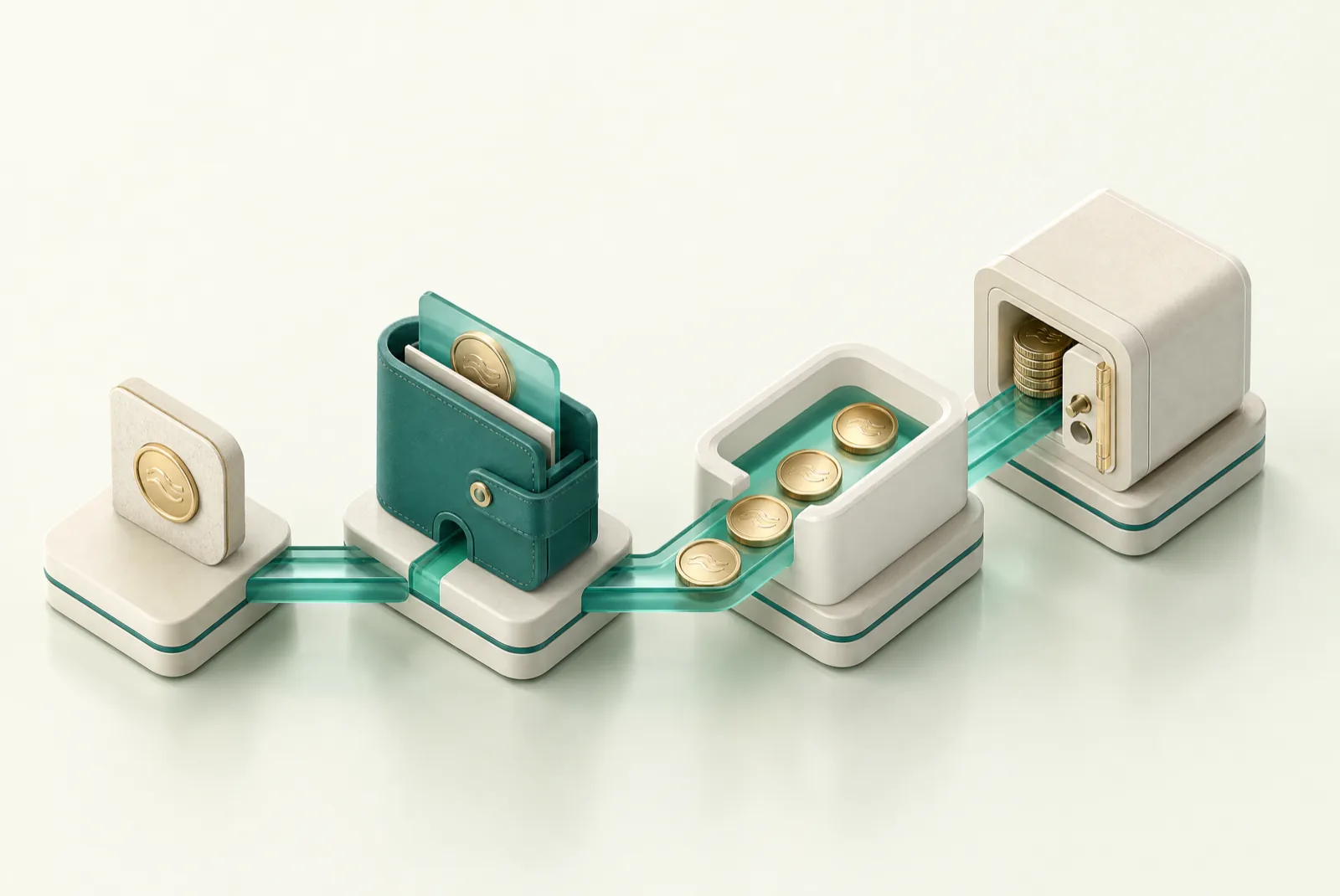
Custody
The money never stops with us
Non-custodial here is a property of how collection works, not a policy we promise to keep. There is no account of ours for your money to sit in, so there is nothing for us to freeze, lose or withhold.
Straight to your address
Settlement goes to an address you control, in the stablecoin that was charged. Nothing is swept into an account of ours on the way.
A bounded approval
Recurring collection draws on a limit your customer signed. Nothing can take more than was agreed.
Revocable by them
They can withdraw the approval from their own wallet, whenever they like, without asking us first.

What it is not
The parts of the category Reclack is deliberately outside
Payments is a wide word. These are the things Reclack is regularly assumed to be and is not, which is usually more useful than another description of what it is.
Not a custodian
Funds move from your customer's wallet to yours. They never sit in an account Reclack controls, because there is no such account.
Not a bank
Reclack holds no deposits, extends no credit and pays no interest. It is software that bills, not a place to keep money.
Not an exchange
Nothing is converted, quoted or traded. A customer pays in the stablecoin the price is denominated in, and that is what arrives.
Not a wallet
Your customers bring their own. Reclack never asks for a seed phrase, a private key or anything that would let it move funds on its own.
Not a card processor
There is no acquirer, no interchange and no chargeback window. A confirmed onchain payment is final, which is the trade being made.
Not a token
There is nothing to buy, hold or stake. Reclack charges a percentage of what it collects for you, in the same stablecoin.
The name
Reclack is a coined name, not a word
It was made up, it means nothing on its own, and it belongs to one company. If you arrived here looking for something else, the resemblance is a coincidence rather than a spelling mistake.
In short
The facts, in one place
What it is
- Billing infrastructure for stablecoin payments
- Subscriptions, checkout, invoices, payment links, usage billing and a customer portal
- An API and a dashboard, for businesses that bill other people
- Non-custodial by construction, not by policy
How it works
- Payments are collected onchain against a wallet authorisation
- Recurring charges draw on a bounded approval the customer can revoke
- Settlement goes directly to a merchant-controlled address
- Every state change is delivered as a signed webhook
Where to find us
- reclack.com for the product
- docs.reclack.com for the API reference and quickstart
- app.reclack.com to sign in
- [email protected] for anything else
The rest of the stack
Bill in stablecoins, settle to your own address
Create an account and take a payment on the test network in an afternoon. Nothing to install, and no call to book first.