Stablecoin Payment Links for High-Value International Sales?
Should you use stablecoin payment links for international high-value transactions? See mechanics, USDC invoicing, real figures, and merchant risks explained.

International sales, especially high-value ones, expose merchants to friction in cross-border settlement. Bank wires are slow, expensive, and error-prone. Card rails often do not work for large B2B transactions. Stablecoin payment links, especially those that settle in USDC, are an option that sidesteps many of these problems. But they are not a universal fit. The mechanics, risks, and customer experience differ from fiat systems. Here is how to decide if stablecoin payment links are right for your high-value international deals.
How Stablecoin Payment Links Work for High-Value Transactions
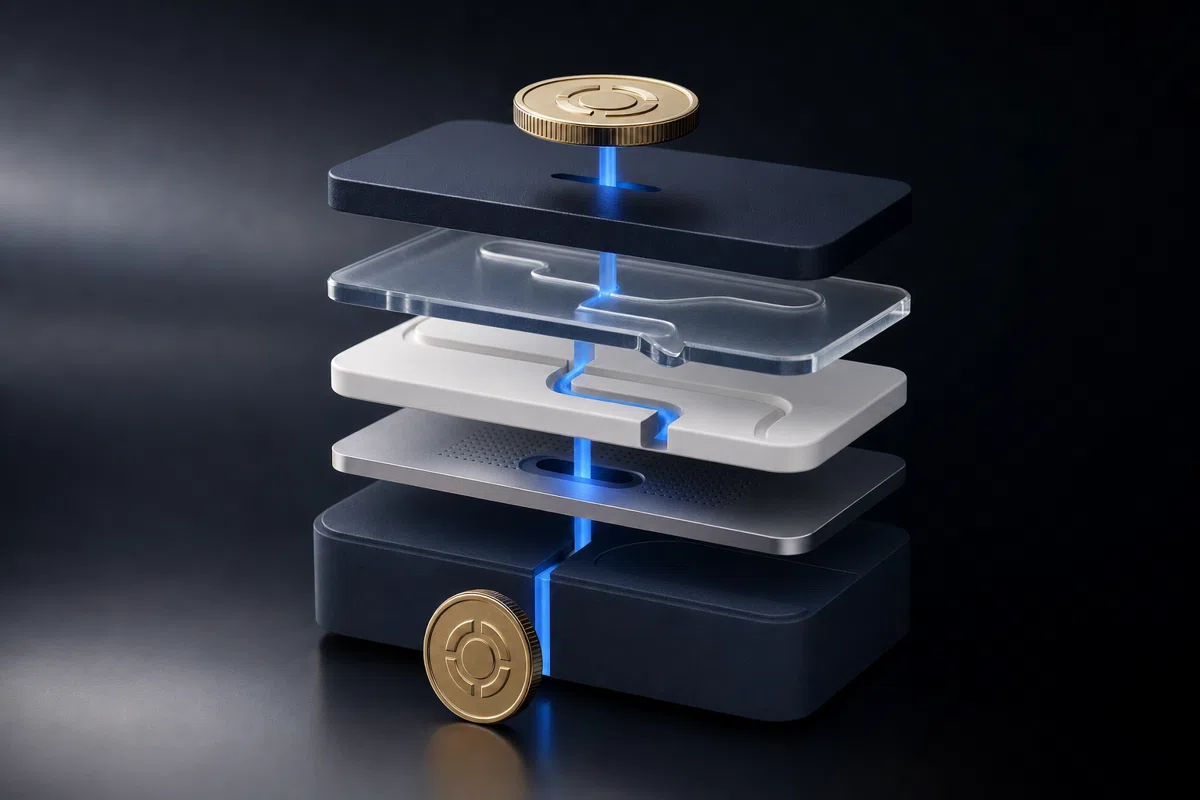
A stablecoin payment link is a URL that, when visited, prompts the payer to send a specified amount of USDC from their own wallet to a destination address. The merchant creates the link, sends it to the customer, and monitors for payment. Settlement happens directly onchain. The funds move from the payer’s wallet to the merchant’s address. No intermediary holds or routes the funds.
For high-value sales, the link can specify the exact USDC amount due. The customer sees the amount, the payment address, and the chain (Ethereum, Polygon, or Base). They sign the transaction with their wallet. When the payment settles onchain, the transaction is final. There is no chargeback or reversal.
Example: Selling a $40,000 License to an Overseas Firm
Suppose you are a SaaS vendor based in the US. You close a $40,000 annual license with a Singapore-based company. Traditional options:
- International wire: $30–$80 in bank fees, several days to clear, possible FX uncertainty
- Credit card: 2%–3% fee, possible rejection or cap on transaction size
- Crypto: USDC payment link, settled in less than a minute, typically less than $2 in gas (on Polygon or Base)
You generate a payment link for 40,000 USDC on Polygon. You email it to the customer. They connect their wallet and approve the transfer. You receive 40,000 USDC in your Polygon address. The onchain record shows the sender, receiver, and amount. There is no intermediary risk. No chargeback. No waiting on banking hours or correspondent chains.
Merchant Risks: What Changes with Stablecoin Links
Stablecoin payment links make some risks smaller and others larger. For high-value international transactions, consider:
No Chargeback, No Reversal
Onchain settlement is final. If a customer sends USDC to your address, you have the funds. If the payment is sent to the wrong address, or in the wrong amount, there is no recourse except a manual refund. This is an advantage if you want to eliminate chargeback risk. It is a risk if you have non-crypto-native customers who may make mistakes.
Wallet Hygiene and Human Error
For large invoices, payers often transfer USDC from an exchange or cold storage. Mistyping the settlement address or misunderstanding the chain can result in lost funds. The payment link should clearly display the destination address and the chain. Some merchants display QR codes and double-confirmation screens to reduce error.
Compliance and Source of Funds
Receiving large USDC payments can trigger compliance checks, both internally and with your banking partners if you off-ramp to fiat. You still need to know your customer. Onchain settlement does not remove regulatory obligations. Stablecoin payment links do not enforce KYC, but you can tie the link to an invoice, customer ID, or other offchain information.
Volatility and Peg Risk
USDC is designed to hold its value against the dollar. In practice, peg breaks are rare but not impossible. For six-figure invoices, some merchants hedge or off-ramp immediately after settlement. The payment link fixes the USDC amount, not the underlying dollar value at the time of payment. This is different from quoting in local currency at spot FX rates.
Customer Experience: What to Expect
Customers paying large invoices with stablecoins need to:
- Have a funded wallet on the correct chain
- Be comfortable signing transactions for large amounts
- Understand that the transaction is final and cannot be reversed
In practice, this often means working with crypto-native buyers. If your counterpart is not familiar with wallets or onchain settlement, consider walking them through a small test payment first.
Example: Payment Link Flow for a $15,000 Cross-Border Deal
A UK-based design agency invoices a US client for 15,000 USDC on Ethereum. The agency uses a payment link. The client:
- Receives the link via email
- Connects their wallet (e.g., MetaMask)
- Confirms the payment details: 15,000 USDC to the agency’s settlement address
- Signs the transaction
- The agency monitors the chain for settlement. Once confirmed, the funds are available.
If the client accidentally sends USDC on Polygon or to the wrong address, the funds do not arrive. The agency cannot pull funds or reverse an error.
Comparing to Traditional Payment Rails
| Method | Settlement Speed | Reversal Risk | Fees (USD) | Customer Friction |
|---|---|---|---|---|
| International Wire | 1–5 days | Possible | 30–80 | High |
| Card (if possible) | Instant/1–2 days | High | 2–3%/600–1200 | Medium |
| USDC Payment Link | Minutes (onchain) | None | ~$2 | Medium (crypto req) |
Stablecoin payment links are not for every customer. But for high-value, international, crypto-native deals, they remove waiting, reduce cost, and eliminate chargebacks. They put settlement and errors in the hands of the payer and the merchant, not banks or card networks.
When to Use Stablecoin Payment Links for High-Value Sales
Choose payment links when:
- Both parties are comfortable with crypto and onchain settlement
- The transaction size makes card fees or bank delays unacceptable
- You want to eliminate chargeback risk
- You invoice in USDC and can accept peg volatility (or hedge)
- You can manage KYC and compliance offchain
Avoid payment links if your customer is not crypto-native, is likely to make an onchain mistake, or requires fiat reconciliation at a specific FX rate.
We built Reclack to handle these flows cleanly. Our payment links settle in USDC on Base, Ethereum, or Polygon. Settlement is non-custodial. The customer always sees exactly what they are signing. Every transaction is final when confirmed onchain. To see how Reclack fits your billing stack, visit reclack.com.